
Toyota bZ4X Singapore Review: Price, Range & COE Category Guide
TOYOTA bZ4X · FIRST ALL-ELECTRIC
A Composed First Step
"Toyota's first mass-market EV doesn't try to reinvent the brand — it just electrifies everything that already worked. Composed, spacious, and genuinely likeable, with a few rough edges still to sand down."
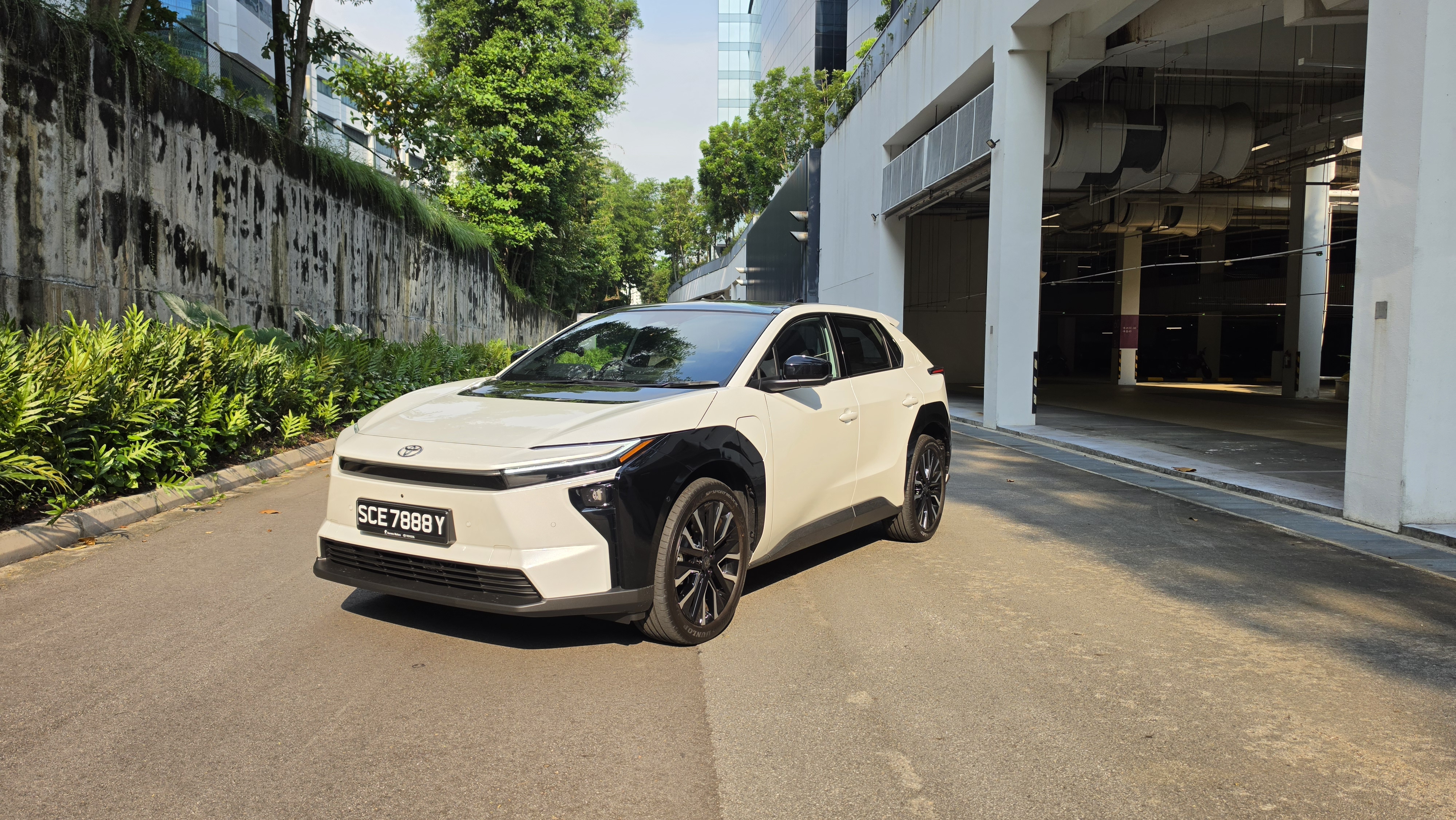
Not a converted combustion platform — the bZ4X was built as an EV from the ground up, and it shows in how it drives.
Same platform, same electric bones as the Subaru Solterra XT — different badges, slightly different tuning.
Resolution here is noticeably better than what you'll find in other Toyota models — genuinely useful when parking tight.
A premium-feeling glass-like pad rather than the usual rubberised tray most other makers still use.
Well-bolstered and comfortable, with memory settings — a nice touch that's easy to overlook until you don't have it.
Introduction
Let's get the obvious question out of the way, because everyone asks it: why "bZ4X"? The "bZ" stands for "beyond Zero" and gets its own little blue badge on the car, while "4X" — rendered in silver — signals the crossover, go-anywhere positioning. It's a clunky name for what is actually a fairly significant moment for Toyota: their first proper, purpose-built, all-electric mass-market model.
Worth flagging early — this isn't a solo Toyota effort. The bZ4X shares its platform with Subaru, who sell their version as the Solterra XT. Same electric bones underneath, different badges, and a slightly different tune on each side. After spending real time behind the wheel, the bZ4X reads less like a first attempt and more like a company that's been quietly doing its homework.
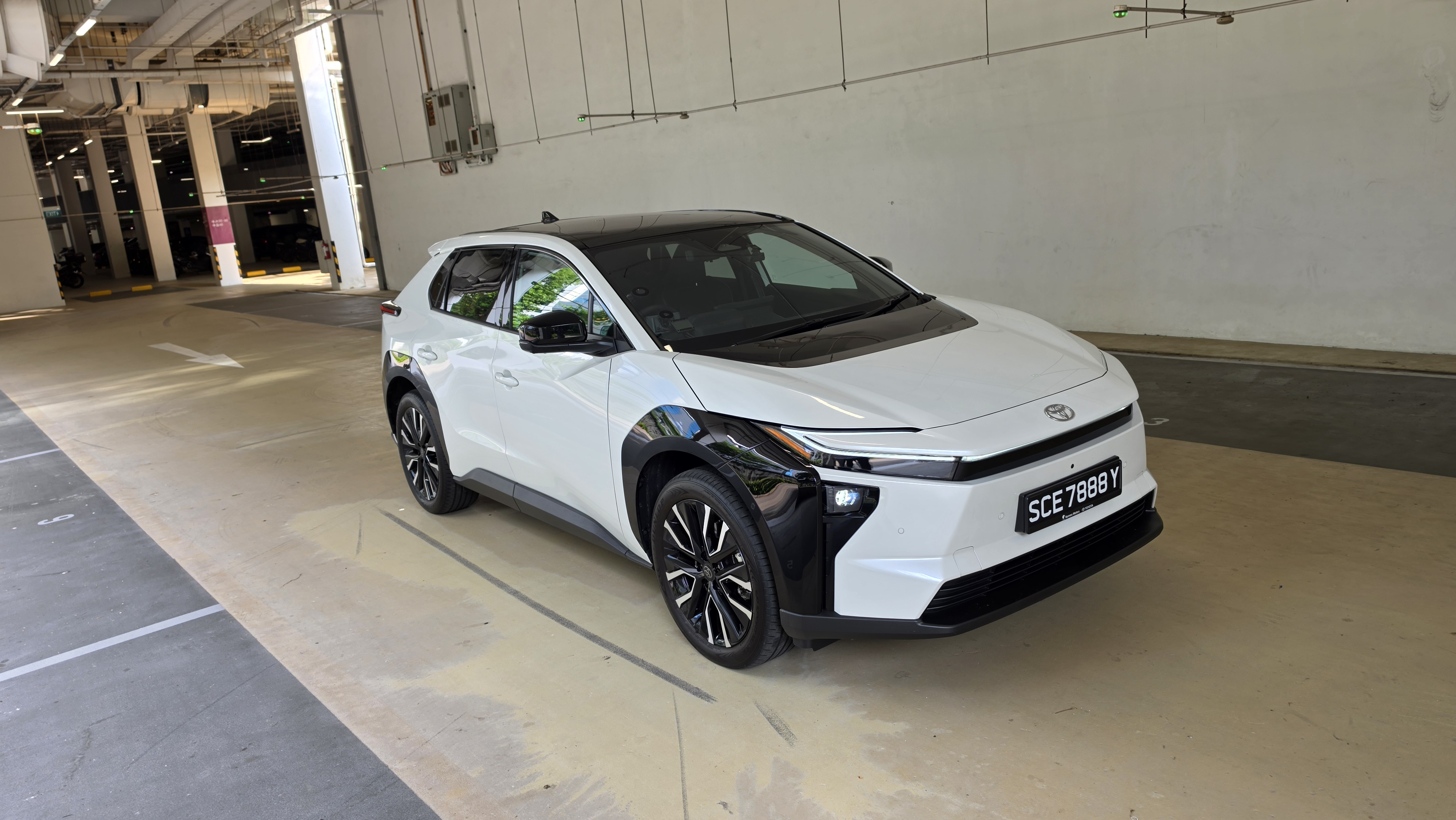
The bZ4X in the metal — sleeker than most crossover EVs at this price point. Photo: Cars&TechSG
Exterior Design
Toyota didn't hold back on styling this one, and it's a good thing. The front is dominated by a light bar paired with headlights that are smaller and sleeker than you'd expect — no aggressive angles, nothing overdone.
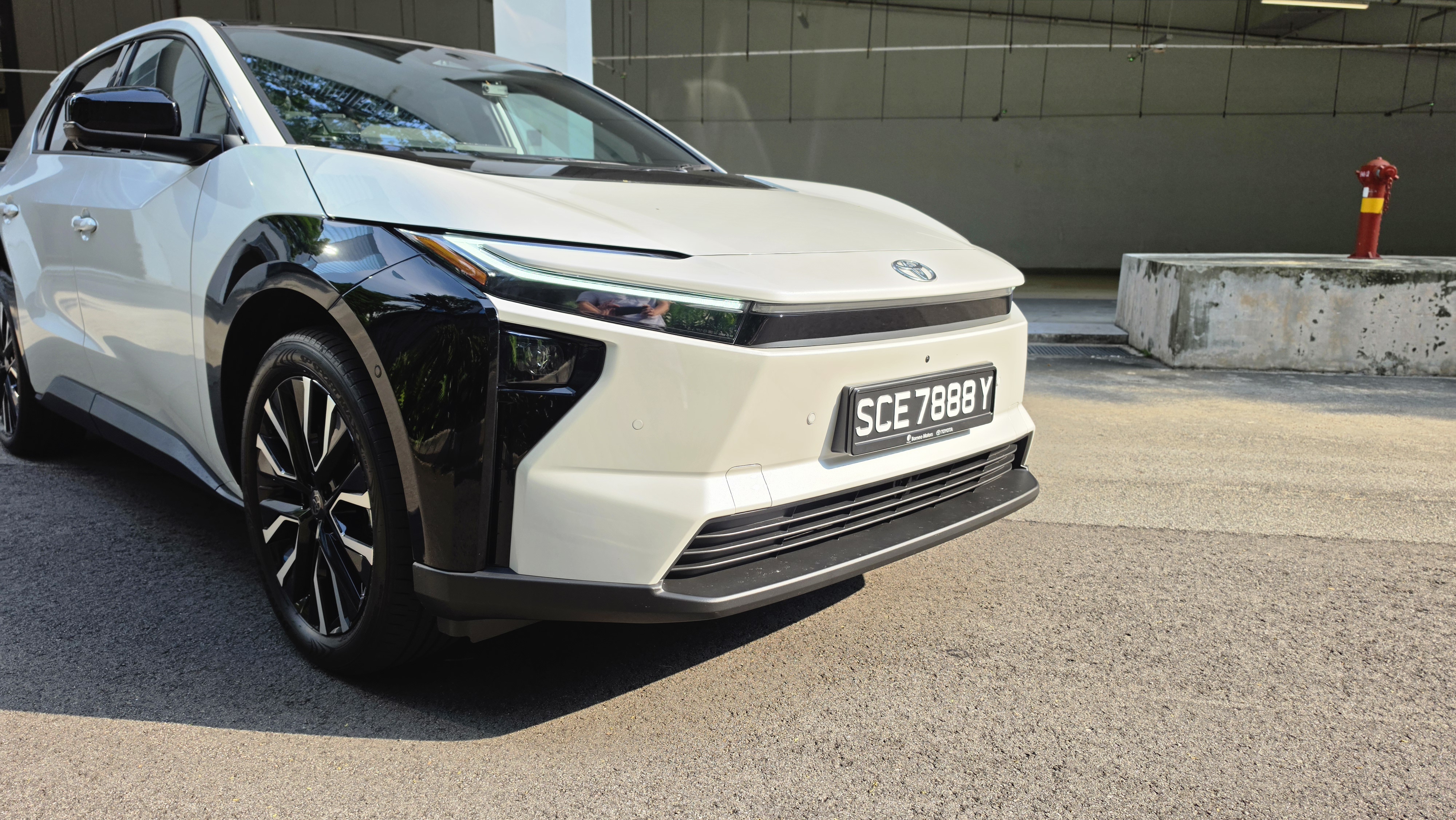
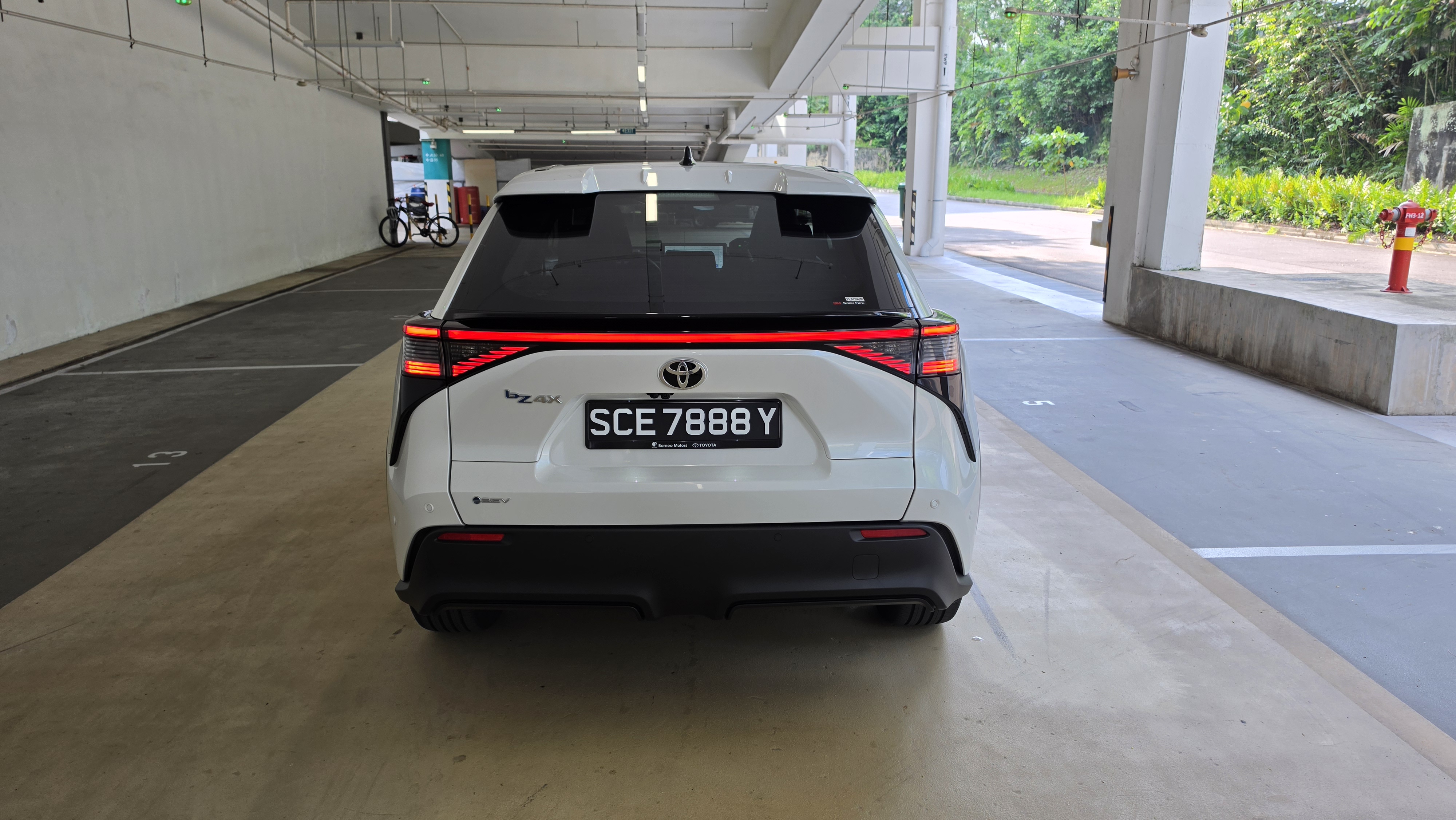
Front light bar with compact headlights; rear light bar's sloping lines add some drama without overdoing it. Photo: Cars&TechSG
Round the back, the rear light bar carries two sleek, sloping lines that taper down toward each edge, giving the tail some visual movement instead of a flat bar for the sake of having one.
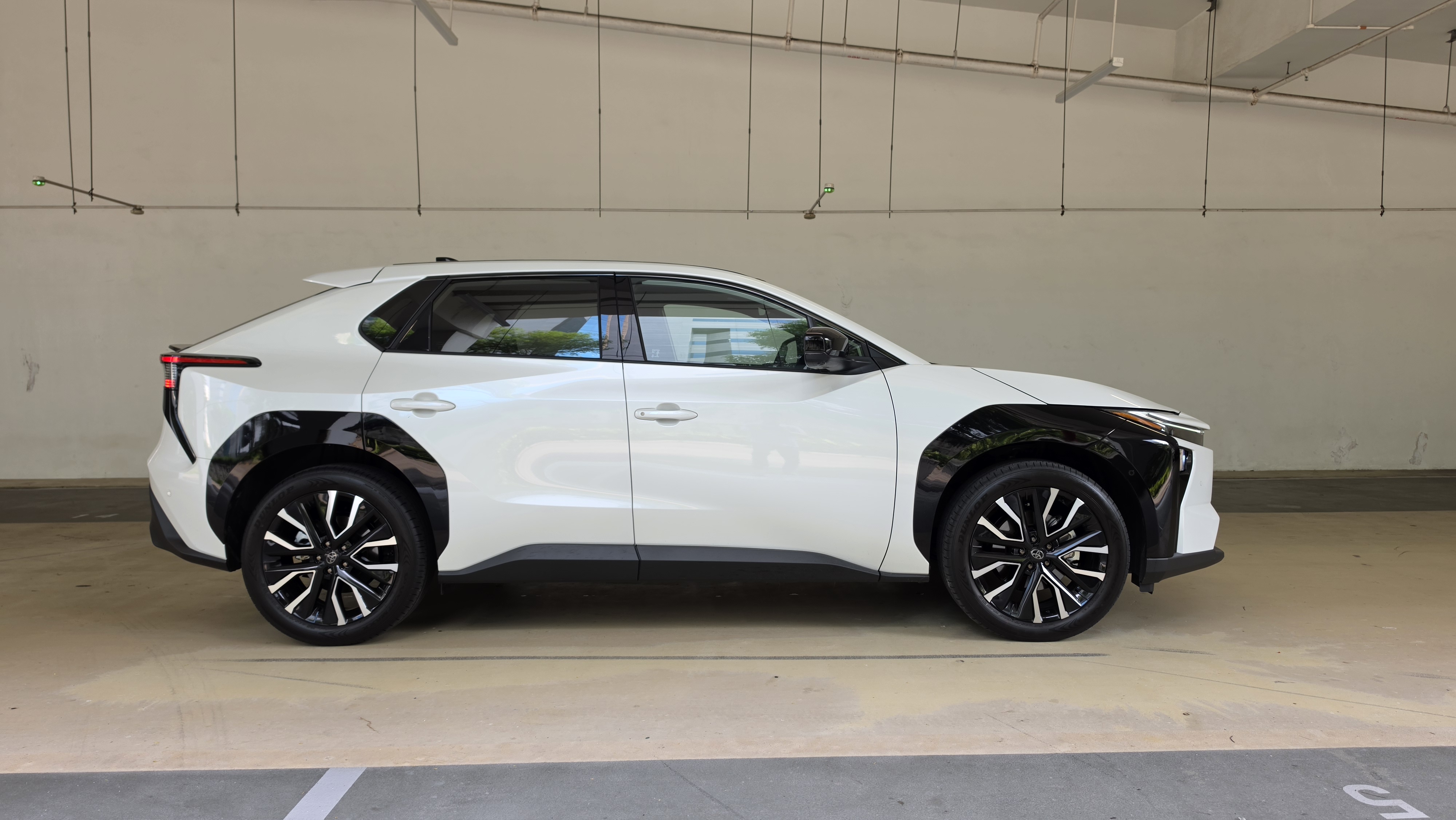
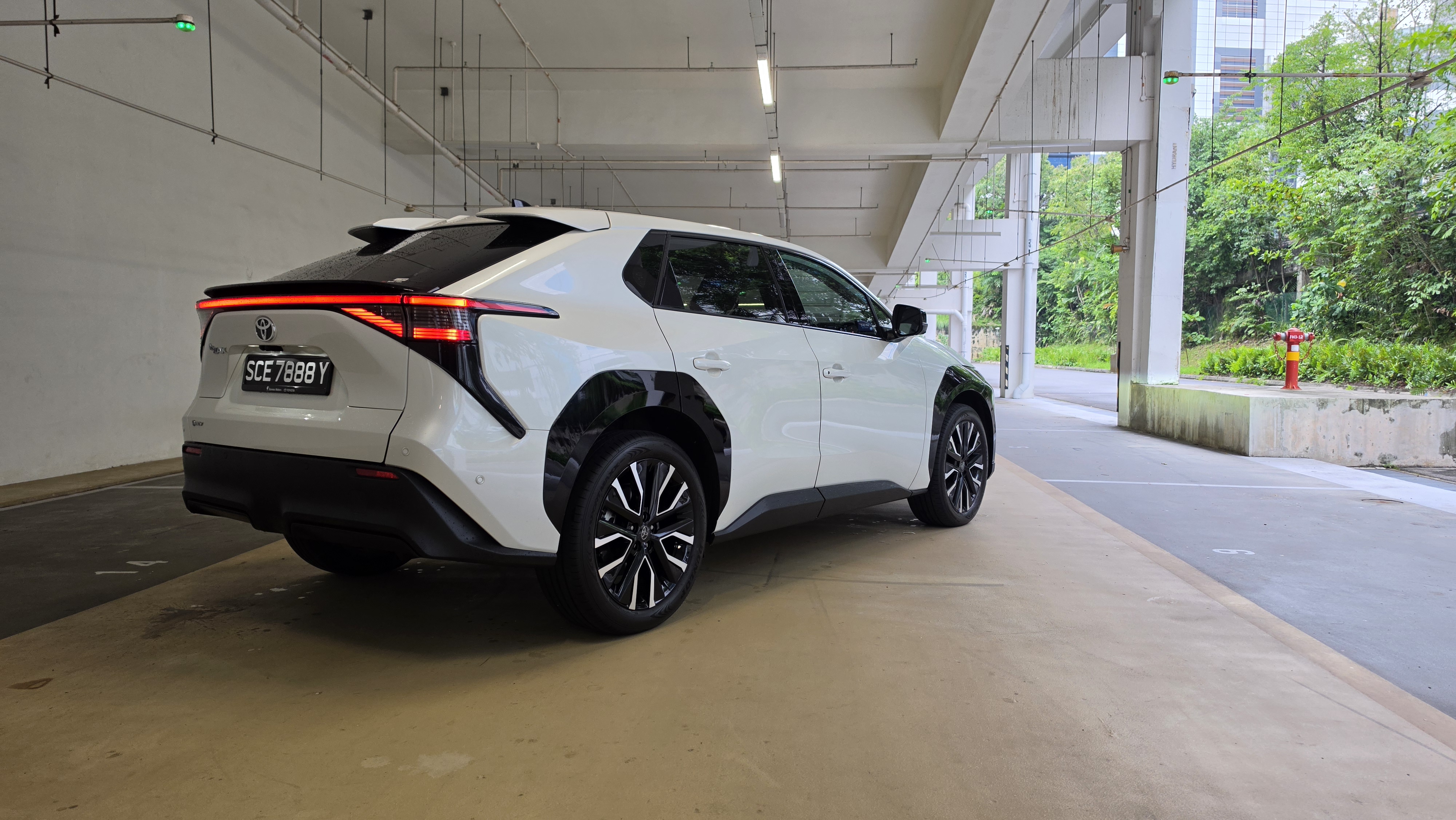
Side profile carries the glossy black wheel-arch trim right through to the rear haunches. Photo: Cars&TechSG
The side profile carries that same restraint, dressed up with glossy black trim around the wheel arches that breaks up what could otherwise be a slab-sided crossover shape. Taken as a whole, it looks sleek without trying too hard, and it genuinely reads as an EV rather than a reskinned combustion model.
A closer look at how the panels catch the light in motion. Photo: Cars&TechSG
Interior & Technology
Step inside and there's good news for anyone who's sat in the back of a typical Toyota — legroom and headroom are both generous, and the cabin feels properly spacious rather than merely adequate. The transmission tunnel sits slightly elevated, a small EV packaging quirk, but it's not intrusive enough to bother three adults across the back bench. That said, the rear bench itself could stand to be a touch longer for bigger frames.
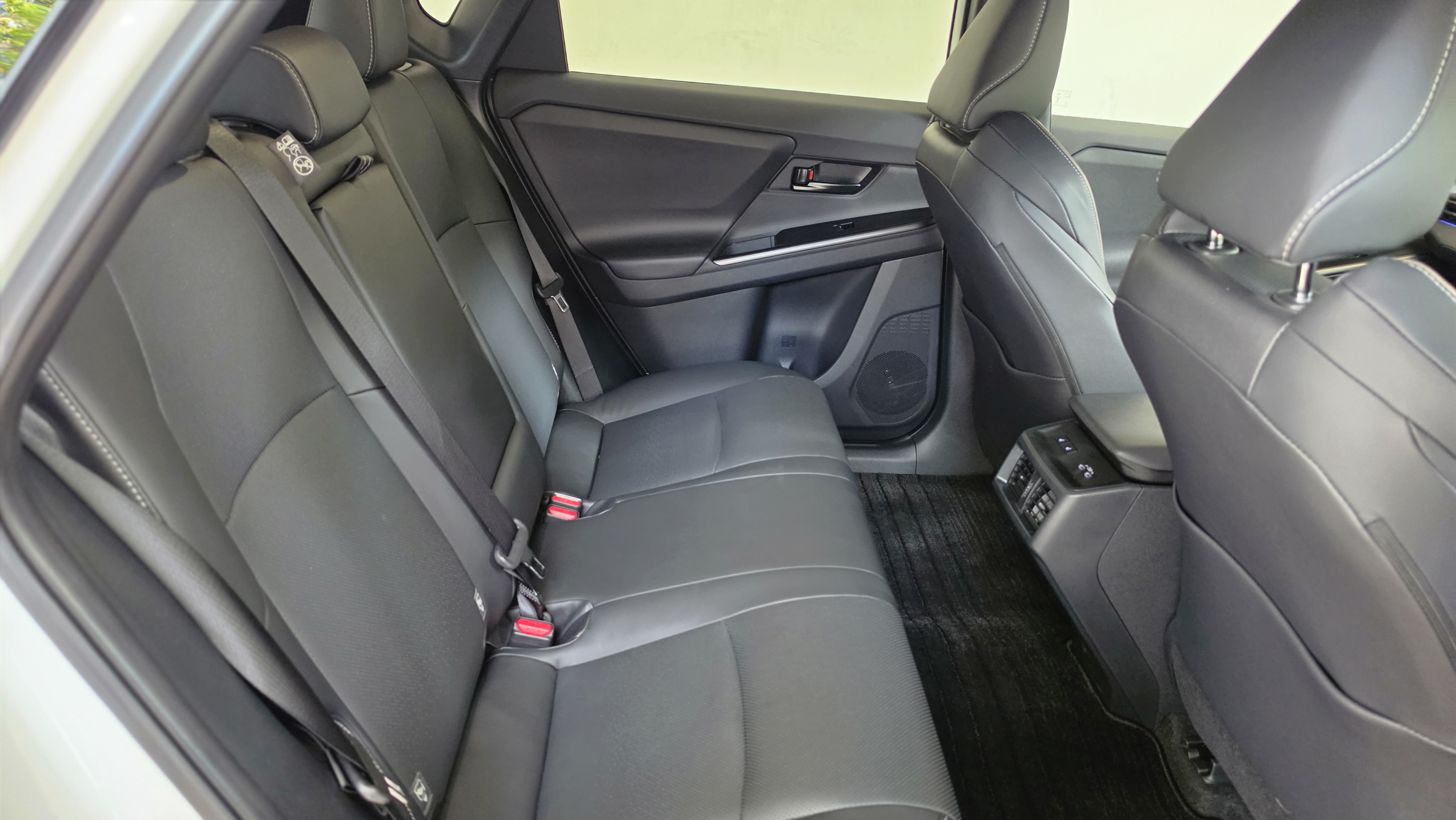
Rear cabin — generous legroom and headroom, though the bench could be a touch longer. Photo: Cars&TechSG
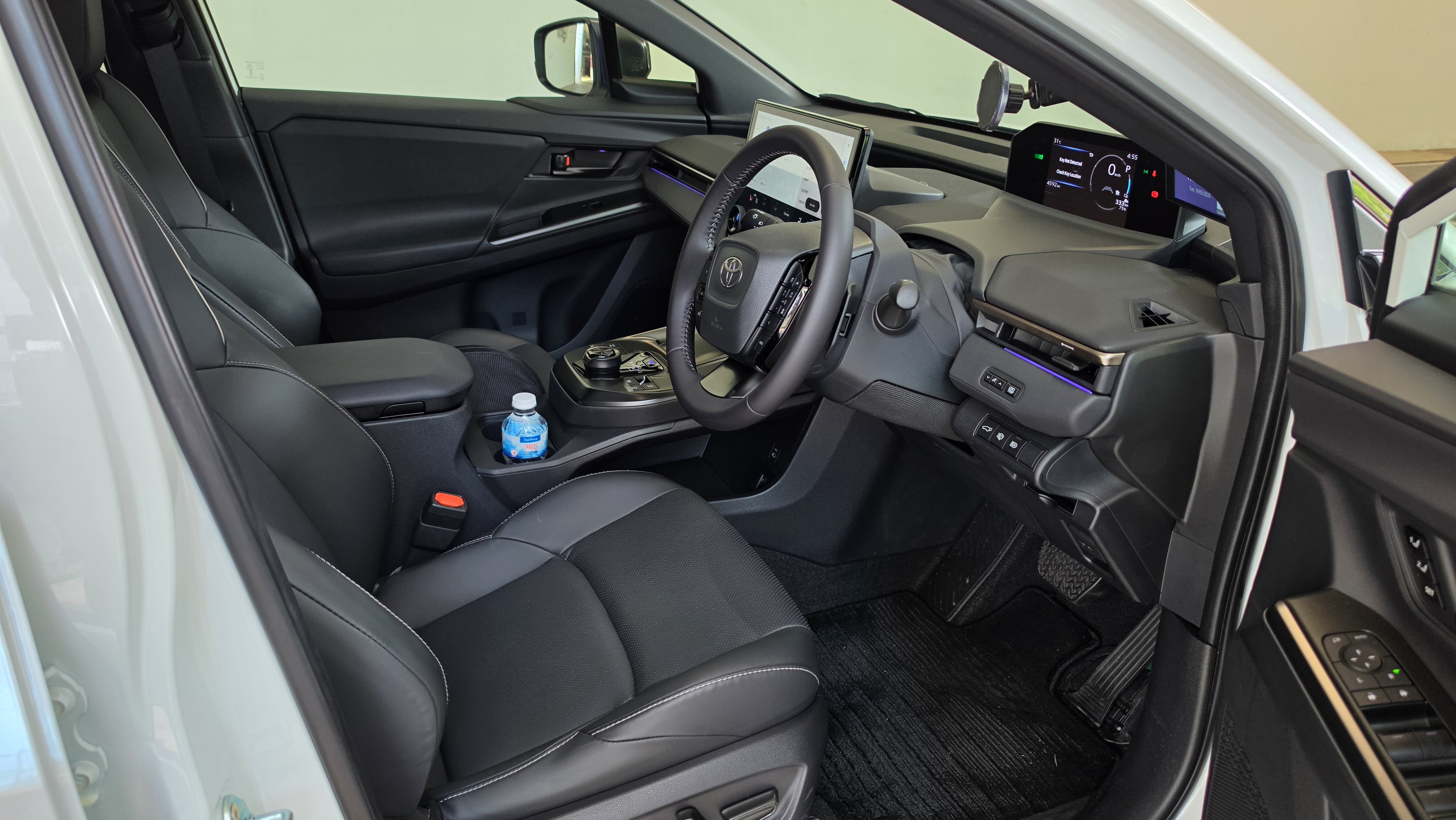
Seats are comfortable and nicely bolstered, and the driver's seat comes with memory settings — a nice touch you don't always get at this level. Rear passengers get two USB-C ports and their own two-zone aircon vents, which matters more than people think on longer trips with kids in tow.
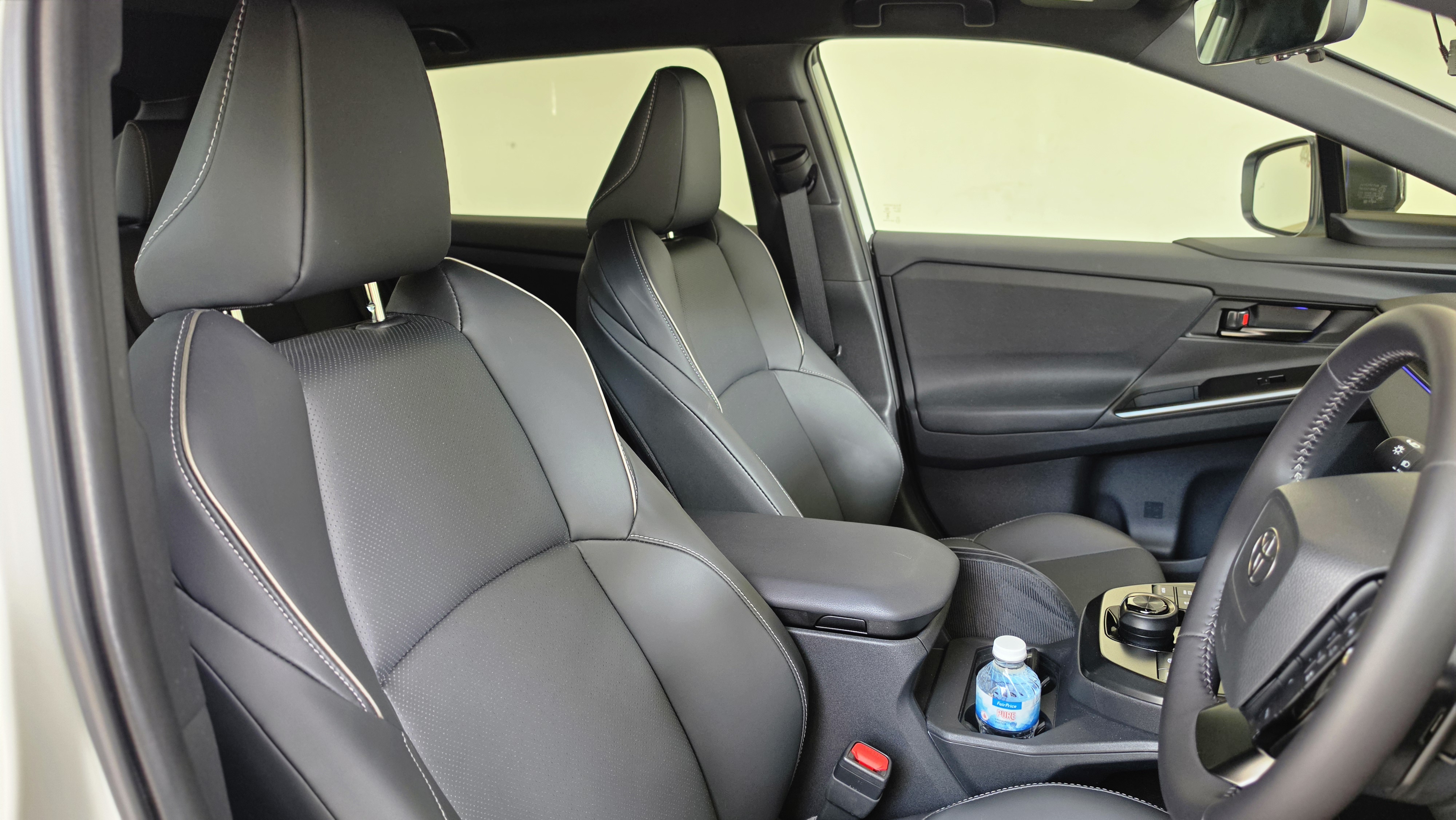
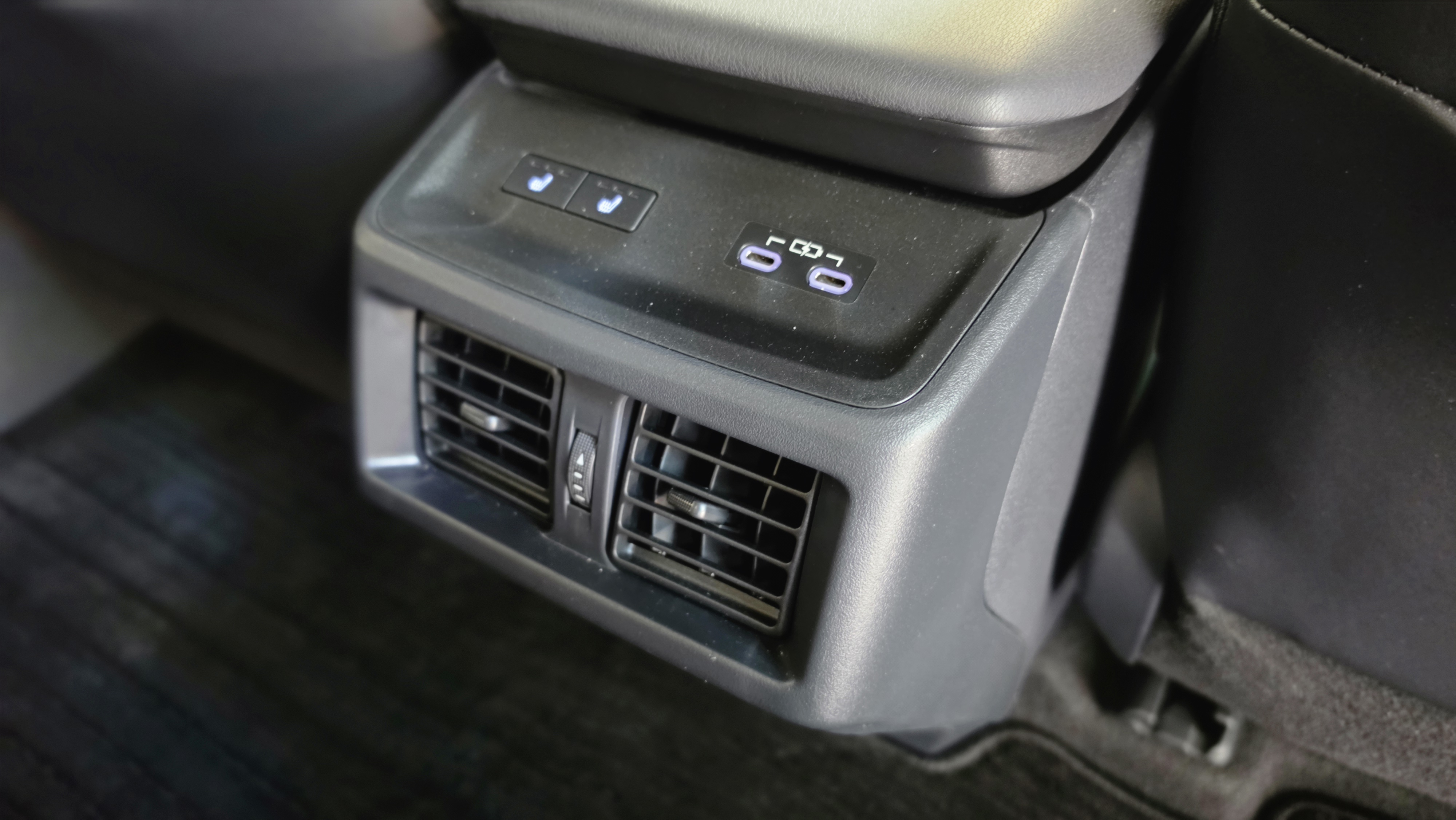
Bolstered front seats with memory settings; rear passengers get their own aircon vents and USB-C ports. Photo: Cars&TechSG
Materials are a mixed bag: the cabin looks and feels modern, but there's a fair bit of plastic scattered around that reminds you this is still a Toyota built to a price. On tech, the bZ4X runs a mix of physical buttons and touchscreen functions, which we're generally in favour of — full touchscreen setups look impressive in showrooms and get annoying fast on the road. The main infotainment screen is fairly basic in terms of features, but design-wise it's a genuine step up from the interfaces Toyota has historically shipped. The digital driver display in front of you, on the other hand, is crisp and clear, no complaints there.
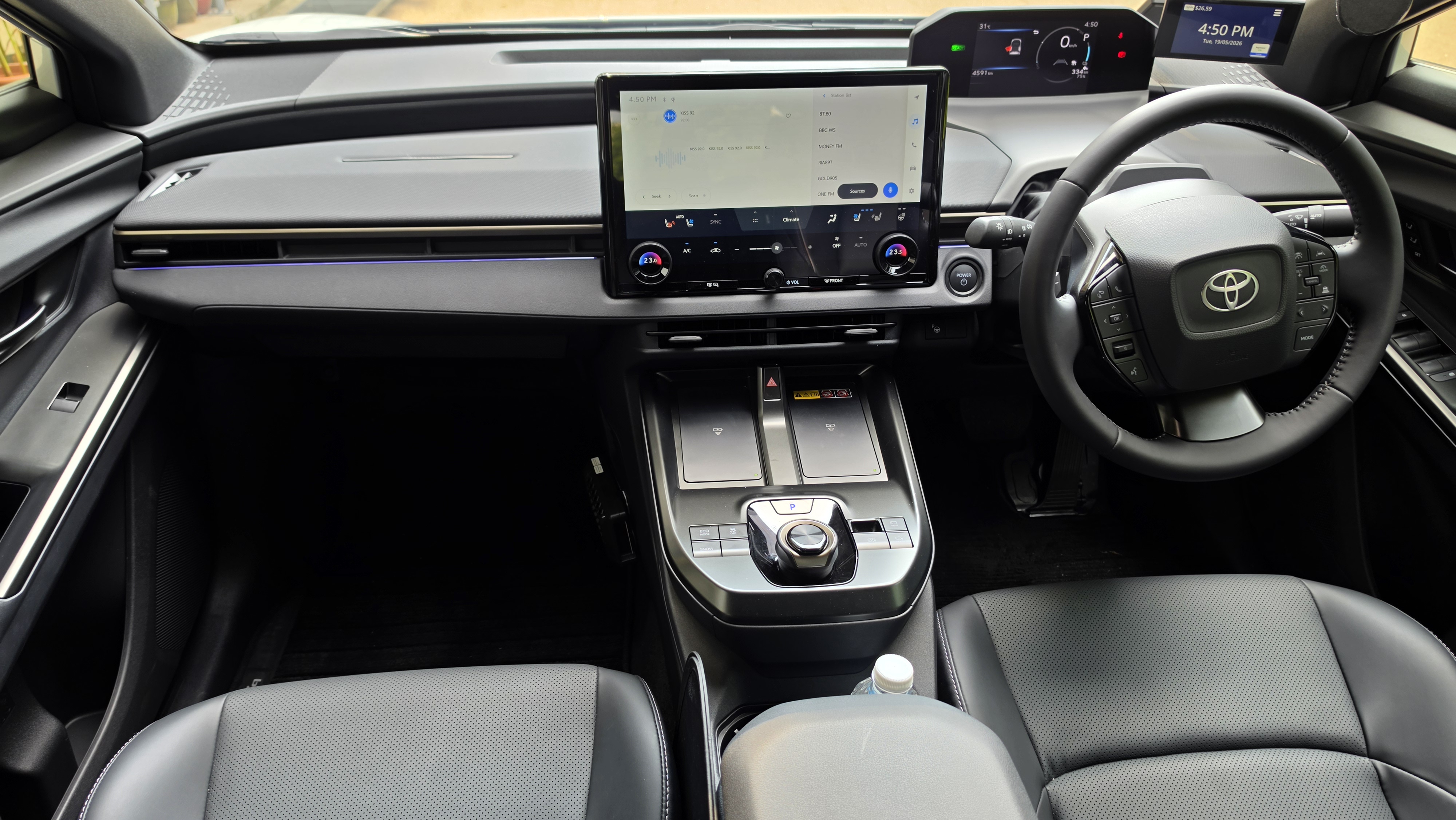
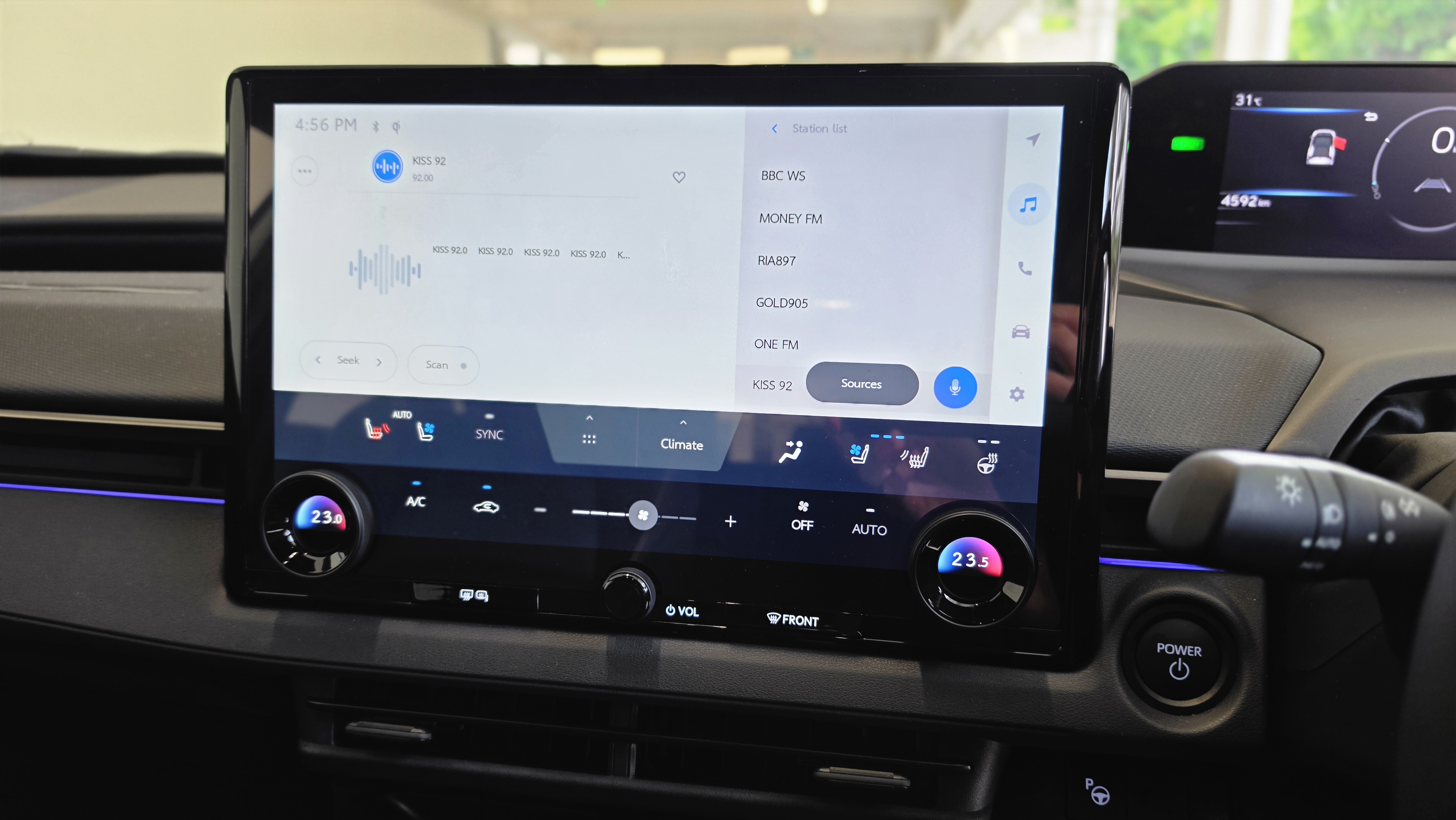
Mixed button-and-touchscreen layout; the digital cluster is crisp, the steering wheel could use fewer buttons. Photo: Cars&TechSG
It's got a cold-to-the-touch premium feel, a departure from the usual rubberised pad most other manufacturers use — a small detail that quietly signals attention to detail.
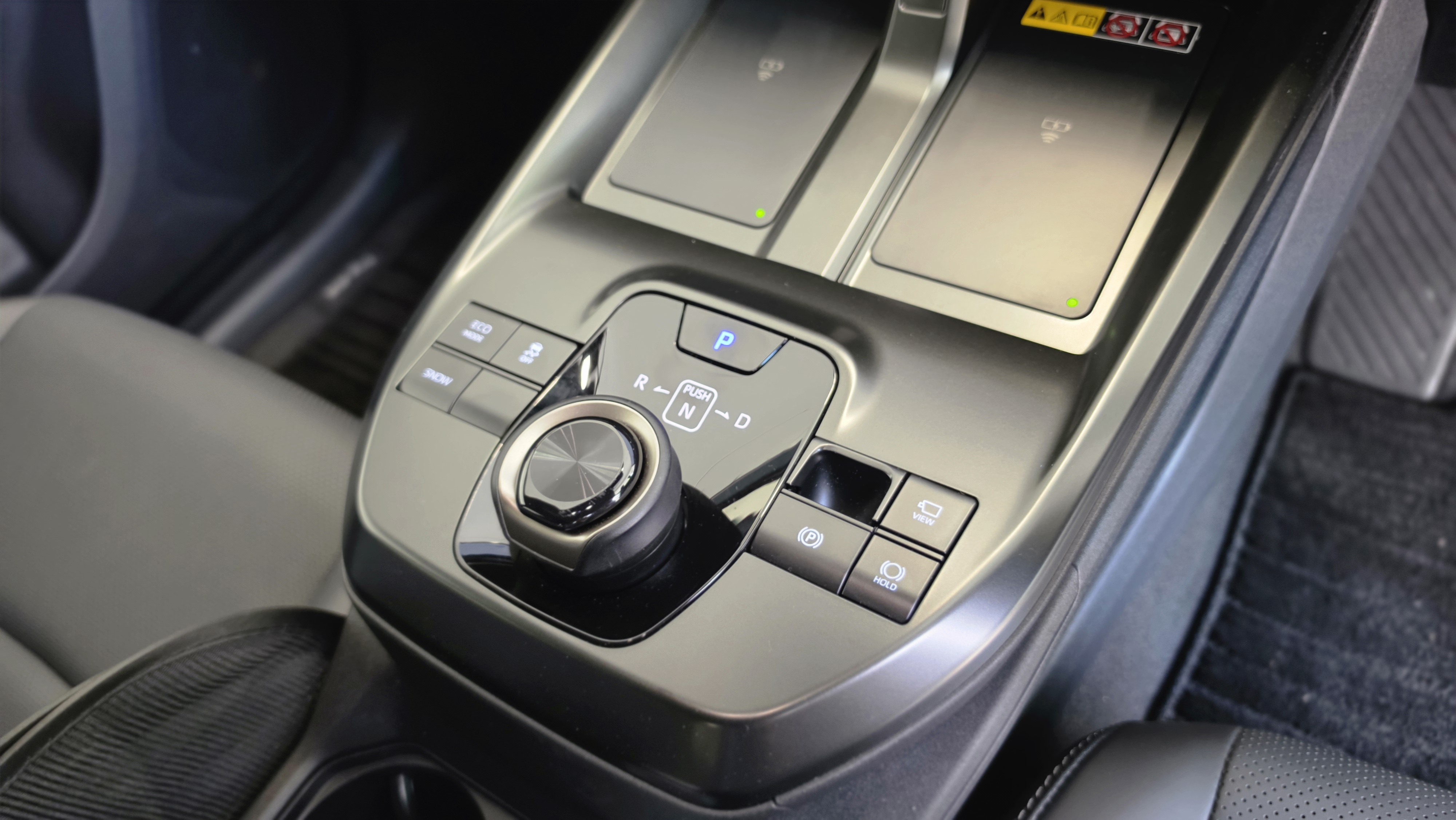
Centre console controls, with the cold-touch wireless charging pad tucked below. Photo: Cars&TechSG
The 360-degree camera deserves a specific mention — resolution here is noticeably better than what you'll find in other Toyota models, and it actually makes a difference threading into a tight lot. The steering wheel, though, is where we'd push back a little. There are simply too many buttons crammed onto it. A cleaner layout with fewer, better-chosen controls would serve drivers better than the current button overload.
Storage is one of the quiet wins — ample space for bottles and the odds and ends you're usually juggling on a drive, backed up by a genuinely useful boot.
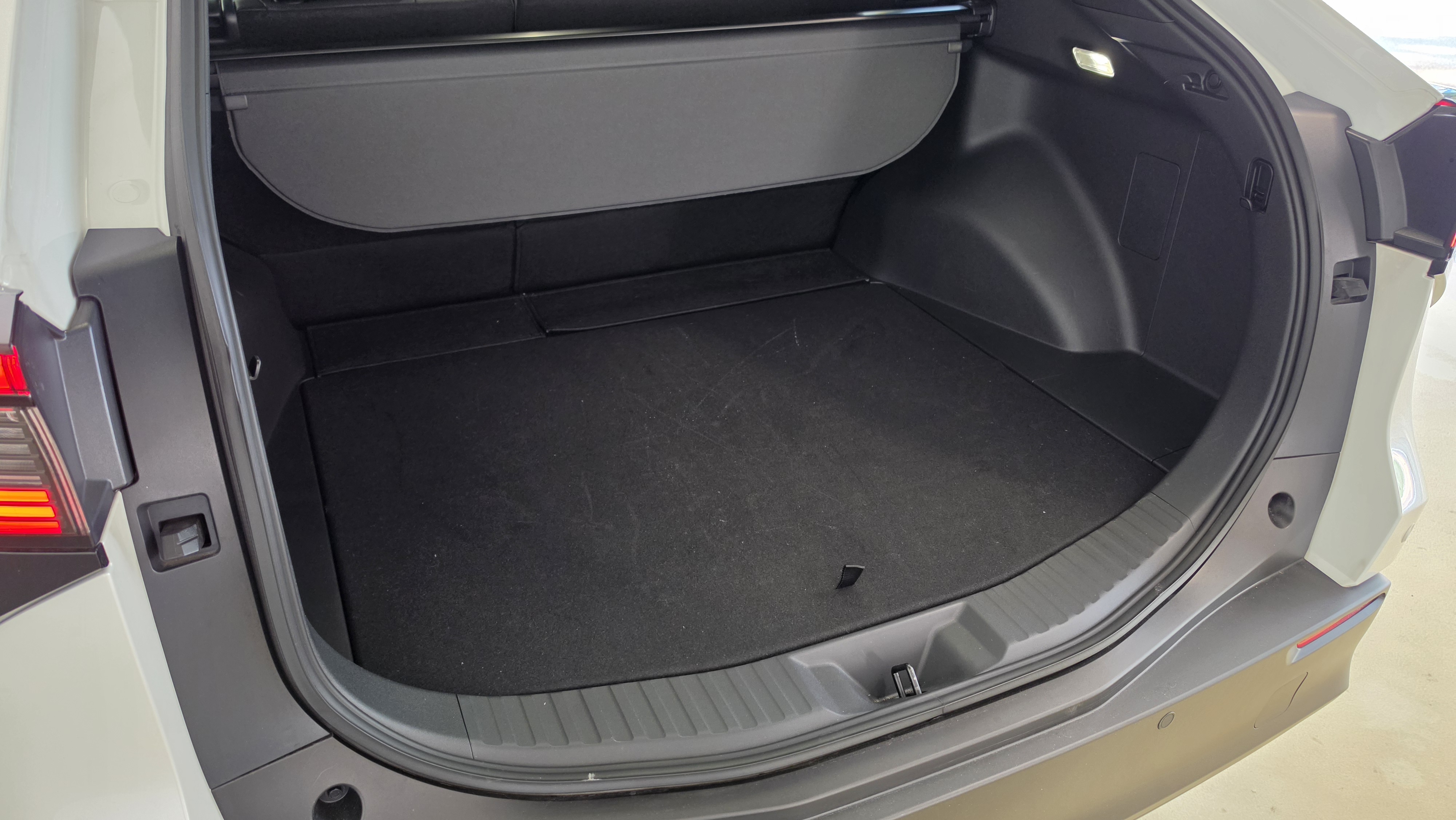
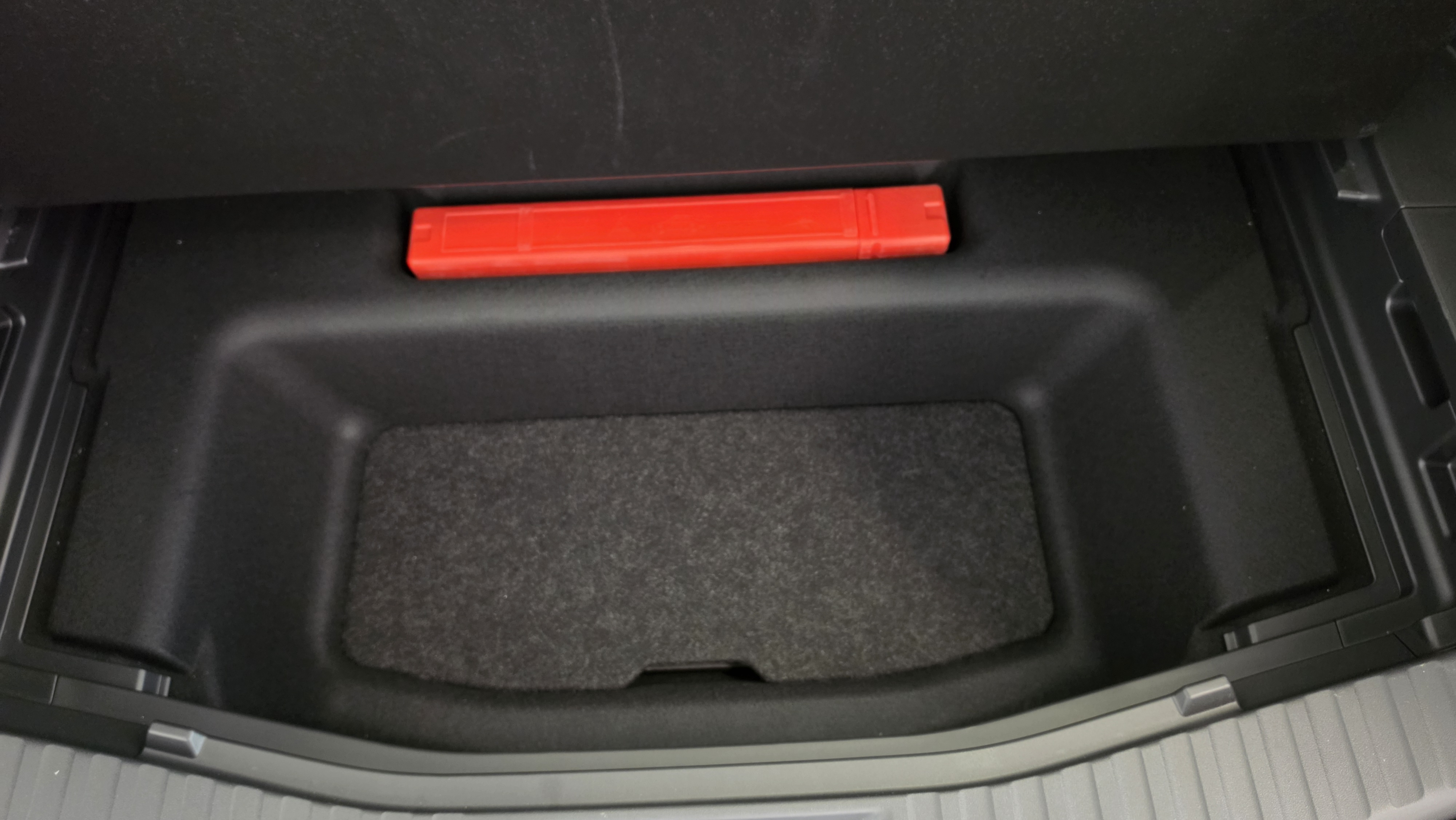
452L of boot space, with underfloor storage adding a bit more room for accessories. Photo: Cars&TechSG
Battery, Range & Charging
The bZ4X runs a 73.1kWh battery good for a claimed 478km of range. On our media drive, we covered 340km and still had 90km showing on the gauge, which lines up reasonably well against that claimed figure. AC charging tops out at 22kW — not bad for the class — and DC fast charging goes up to 150kW, both solid numbers for a first-generation effort. One notable omission: there's no V2L (vehicle-to-load) support, so running appliances or camping gear off the car isn't on the table here.
This variant sends power to the front wheels only — a choice that keeps things simple and predictable rather than chasing outright performance.
340km covered, 90km left on the gauge — range confidence held up well against the claimed figure.
Driving Experience
On the road, "composed" is the word that kept coming to mind. Ride comfort is a strong suit — it soaks up the rough stuff without unsettling passengers, and sound insulation is decent enough that cabin conversations don't need raised voices at speed. Steering is responsive and gives you confidence when you need to make quick adjustments, and overall grip is good. Push it a bit harder into a corner and you will notice some body roll creeping in, which is to be expected from a family crossover tuned more for comfort than back-road thrills.
Regenerative braking is tuned to be gradual and comfortable rather than aggressive — none of that jerky one-pedal feel some EVs go for. Acceleration is decent, and there's a useful punch available when you need to overtake or get off the line quickly at a junction, which is where that 223bhp/268Nm combo earns its keep. It won't win any drag races, but it has enough in reserve when it counts.
A composed, likeable first step into EVs from a brand people already trust.
The bZ4X doesn't try to reinvent what Toyota stands for — it just electrifies it. It's composed, comfortable, spacious, and has that electric feel without losing the reliability image the badge carries. It suits families who are already Toyota loyalists and want something sleek, pleasant, modern, and electric without stepping too far outside their comfort zone.
There are rough edges worth noting — the overloaded steering wheel buttons, a rear bench that could be longer, no V2L, and some body roll if you push it into corners. None of it is a dealbreaker, but it's the kind of thing you notice on a longer test.
For a first proper EV from Toyota, it's a genuinely recommendable one.
| Drivetrain | Front-Wheel Drive |
| Max Power | 223 bhp |
| Max Torque | 268 Nm |
| Battery | 73.1 kWh |
| Claimed Range | 478 km |
| On-Test Range Use | 340km used, 90km remaining |
| AC Charging | 22 kW |
| DC Fast Charging | 150 kW |
| V2L Support | Not Available |
| Infotainment | Touchscreen + Physical Buttons |
| Driver Display | Digital Instrument Cluster |
| Camera | 360-Degree View |
| Wireless Charging | Cold-Touch Pad |
| Rear Connectivity | 2x USB-C, 2-Zone Aircon Vents |
| Seats | Bolstered, Memory Driver's Seat |
| Boot Space | 452 Litres |
| Platform Partner | Shared With Subaru Solterra XT |
© All photographs on this page are the original work of Cars&TechSG. Reproduction, redistribution or reuse of any image in whole or in part — whether for commercial or non-commercial purposes — is strictly prohibited without prior written permission. To request usage rights, contact us via our social channels.