
Jaecoo J7 vs Jaecoo J8

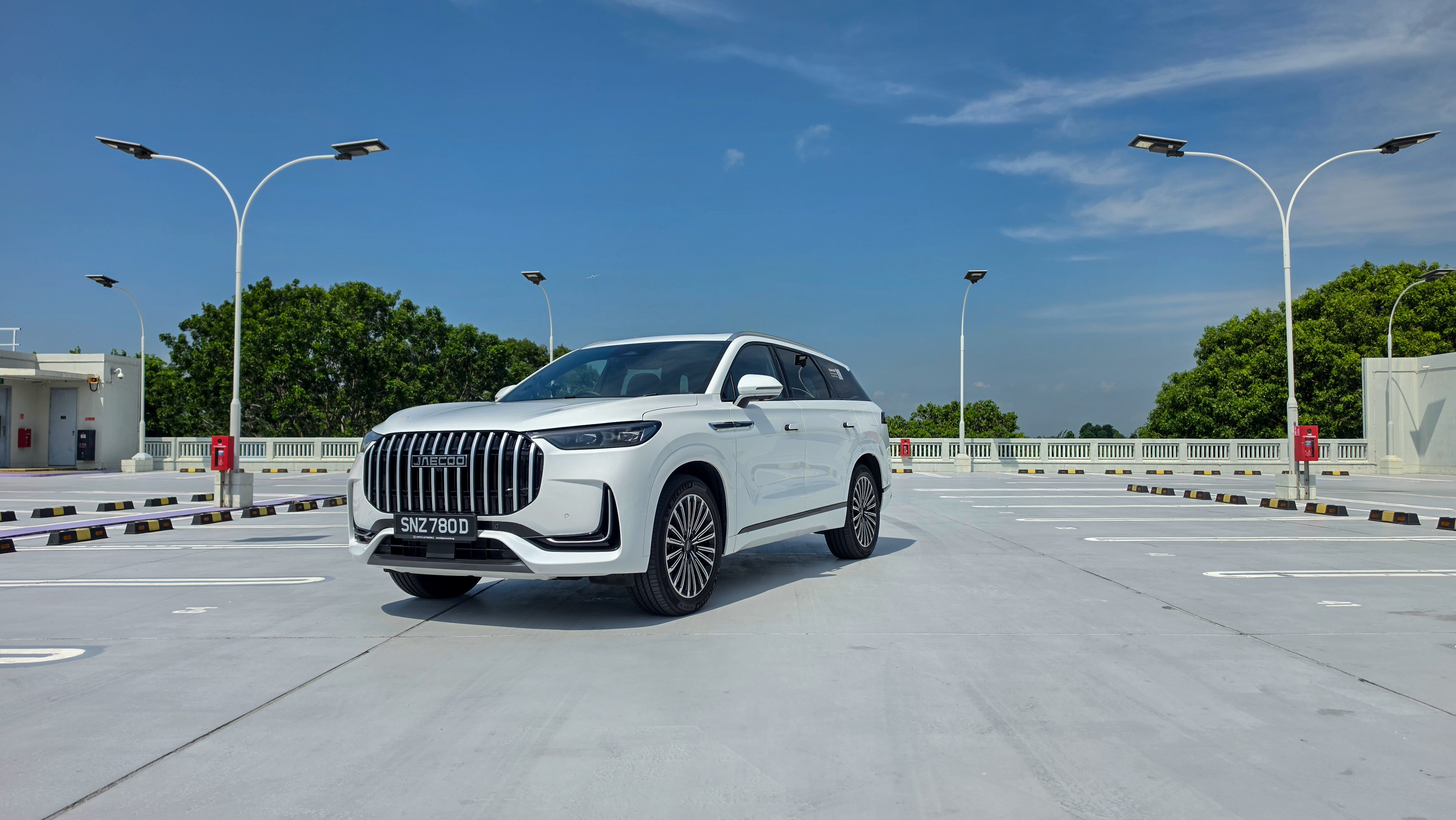
Overview
Both the J7 and J8 run Jaecoo's Super Hybrid System, and both post genuinely impressive combined range figures — but that's about where the similarities end. The J7 is a five-seat SUV built around outright range and off-road-influenced styling, the kind of car you buy so you almost never think about charging. The J8 is the larger, more family-oriented option — a spacious MPV with a third row, a noticeably more premium cabin, and a 0-100 sprint that has no business being this quick for something this size.
Spec Comparison
| Specification | Jaecoo J7 | Jaecoo J8 |
|---|---|---|
| Body Type | 5-seat SUV | MPV (5+2 seat) |
| Powertrain | 1.5L turbo + electric motor, Super Hybrid | 1.5L turbo + electric motor, Super Hybrid |
| Combined Output | 255kW (342bhp), 525Nm | 422bhp, 580Nm |
| 0–100 km/h | 8.5 seconds | 5.8 seconds |
| Drive Type | Front-wheel drive | All-wheel drive (dual-motor) |
| Battery | 18.3kWh | 34.46kWh LFP |
| EV-Only Range | 90km (WLTP) | 134km |
| Combined Range | 1,200km (WLTP, claimed) | 1,400km (CLTC, claimed) |
| Suspension | MacPherson strut (front), multi-link (rear), independent | Sachs-developed CDC (adaptive) |
| Boot Space | 340L (seats up) / 1,265L (folded) | 738L (3rd row folded) |
| Sound System | 8-speaker Sony | 14-speaker Sony |
| Seats | Faux Leather, Front Ventilated | Nappa leather, front massage, ventilated (front + outer 2nd row) |
| Annual Road Tax | $1096 | $4106 |
A note on that combined range row: the J7's 1,200km figure is a WLTP claim, while the J8's 1,400km is measured on the CLTC cycle — the two aren't directly comparable, since CLTC tends to return more generous numbers than WLTP for similar real-world performance. What's clear either way is that the J7 carries the smaller battery and the more efficiency-focused setup, while the J8 wins on EV-only range, outright power, and cabin luxury — at the cost of AWD complexity, a bigger battery to lug around, and the higher road tax that comes with it.
Design & Styling
The J7 leans into an off-road-influenced look — a five-seat SUV silhouette that reads more rugged than plush. The J8 takes a completely different approach: a genuinely futuristic design language on an MPV-sized body, one that undersells its own performance at first glance. Look at the J8's proportions and the instinct is to assume it drives like a slow, unhurried people-mover — an assumption that doesn't survive first contact with its 5.8-second sprint.
Cabin & Comfort
This is where the gap between the two is widest. The J8's cabin punches well above its segment — Nappa leather, a 14-speaker Sony sound system, massage seats up front, ventilated seats for the front row and outer second row, wood-pattern and piano black trim, a centre cooling storage box, an in-car fragrance system, and even a startup chime. It genuinely brings Mercedes to mind in places, particularly around the aircon vents and door-mounted seat controls.
The J7 is comparatively more standard in its cabin execution — a competent 8-speaker Sony system and the usual PHEV creature comforts, but without the same density of premium touches. If cabin luxury is a deciding factor, the J8 isn't close.
Practicality
The J8's biggest practical advantage is its third row and 738L of boot space with it folded down — genuinely useful for a growing family, even if that third row itself is better suited to occasional use and shorter passengers. The J7, as a five-seat SUV, doesn't offer that flexibility, but its smaller footprint makes it the easier car to live with day to day in tighter carparks and narrower roads.
Verdict
For a family cross-shopping these two, the decision really comes down to two things: how many bodies you need to carry, and how much you're prepared to pay to carry them comfortably. The J8's Sachs-developed CDC suspension constantly adjusts damping on the fly, and it shows in very well-controlled body roll and a cabin that stays quiet even at speed — a genuinely comfortable place for kids to nap on a long drive. The trade-off is that its third row is better suited to occasional use than daily school runs, and you're paying for that comfort with a premium fee and a higher road tax bracket on top of a bigger battery to insure and maintain.
The J7 doesn't try to compete on outright cabin luxury or third-row flexibility, but it's the easier car on the wallet day to day — a smaller battery, standard road tax, and a claimed 1L/100km fuel figure once the battery's depleted mean lower running costs over the years you'll own it, which matters as much as sticker price for most families. Its five-seat footprint is also simply easier to park and manoeuvre around HDB carparks and school pick-up lines. For a smaller family or one that doesn't need a third row, that affordability adds up fast; for a larger family that needs the extra seats and boot space, the J8's comfort and space earn their keep despite the higher running costs.
You're a smaller family (or don't need a third row) and want lower running costs — standard road tax, a smaller battery, and efficient day-to-day fuel consumption. The easier, cheaper car to live with long-term.
You have a growing family that needs the extra seats and boot space, and you value the smoother, quieter, better-controlled ride the adaptive suspension delivers — and you're comfortable paying more in road tax for it.